




Saving the Salmon

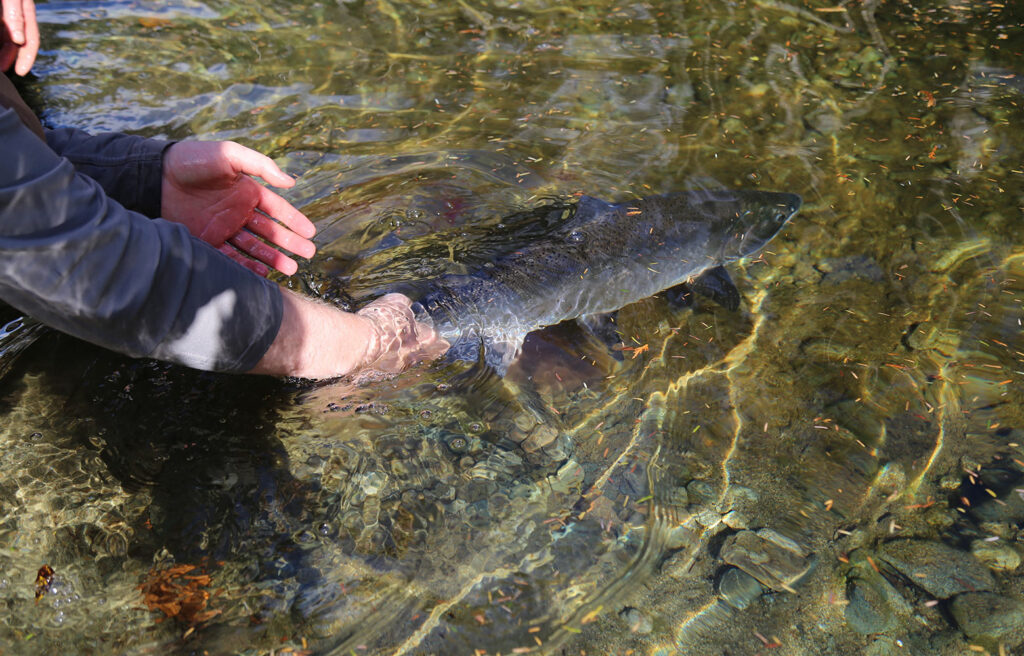
Clayoquot Wilderness Lodge has pledged to scale down its salmon fishing program in an effort to reduce its ecological impact, and raise awareness about the diminishing wild salmon populations in Clayoquot Sound.
Native Chinook Salmon stocks have decreased at an alarming rate in recent years, which causes devastating collateral damage for the entire ecosystem. Most alarmingly, the endangered southern resident Orcas which feed solely on the fish. A combination of climate change, logging, overfishing, marine pollution, aquaculture and disease are some of the factors contributing to the decline.
While salmon fishing is one of the main attractions to the region and has been part of Clayoquot’s adventure programming since the lodge opened in 2000, in a considered decision based on the evidence seen in Clayoquot’s own backyard on the Bedwell River that Chinook are going extinct, the activity will be scaled down.
Ahousaht First Nations Chief, Lewis George
This is a complex issue for many reasons, but I was so happy to hear the news of this decision. I’m supportive of the direction Clayoquot is taking and applaud them for making conservation the priority.
Since 2001, the lodge has worked with Canadian Department of Fisheries and Oceans, and the local First Nation community of Ahousaht, to mitigate and repair human-caused environmental damage and habitat depletion in Bedwell Sound. Substantial work has been undertaken to create new salmon spawning channels and restore native stocks to river systems, with the help of organizations including the Tofino Salmon Enhancement Society and Clayoquot Biosphere Trust.
Ahousaht First Nations Chief Lewis George believes this is an important and positive step. “This is a complex issue for many reasons, but I was so happy to hear the news of this decision from Bradley and Antonella. I’m supportive of the direction Clayoquot is taking and applaud them for making conservation the priority. This is a powerful statement in sustainability.”