


Ancient Formations
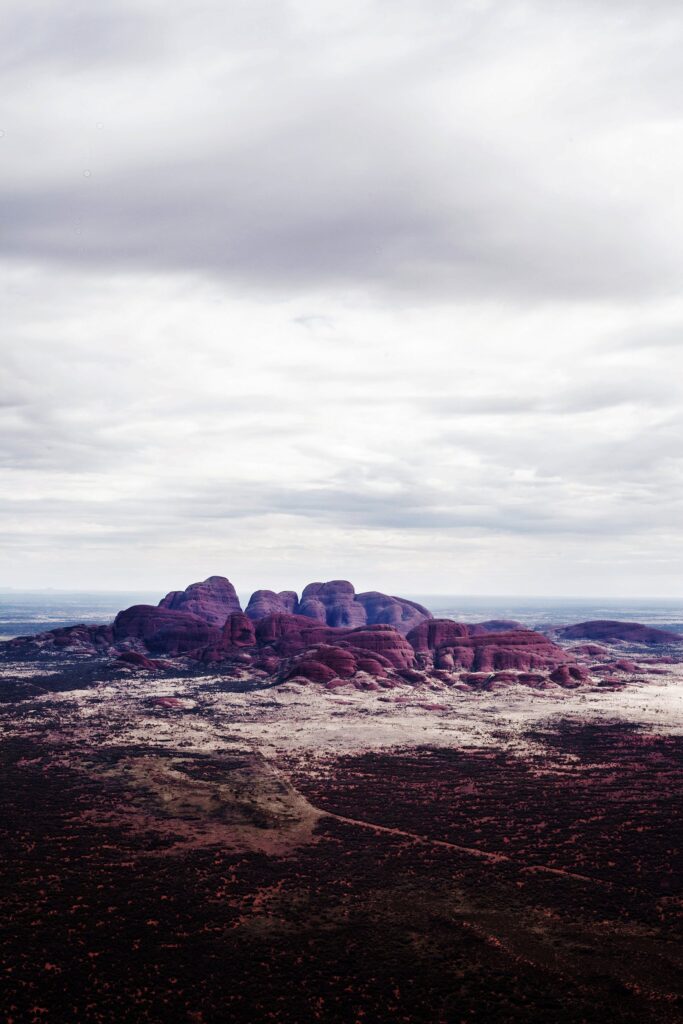
Uluṟu began forming some 550 million years ago, while nearby Kata Tjuṯa rises as a gathering of 36 immense rock domes.
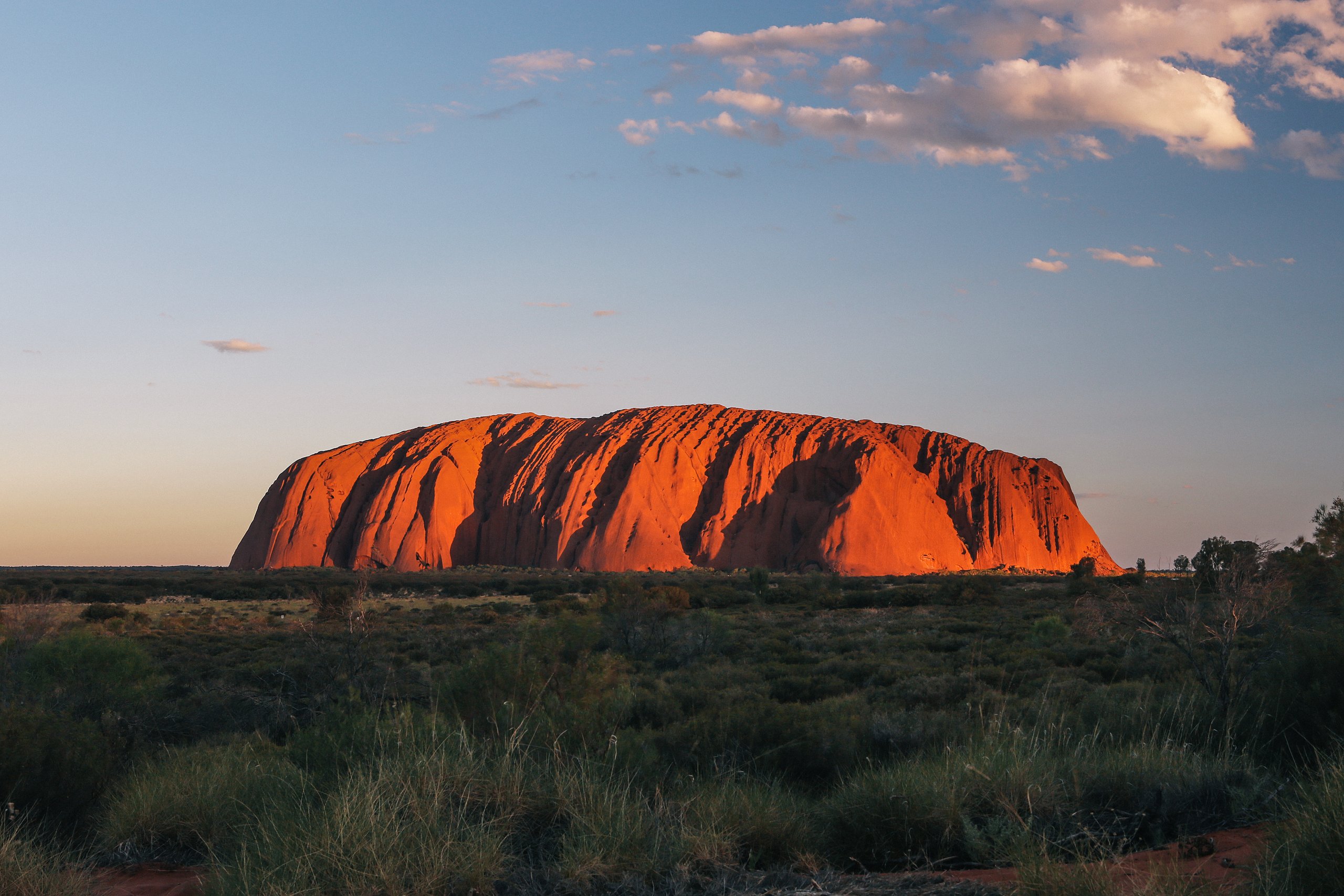
IN THE MIDST OF THE RED CENTRE
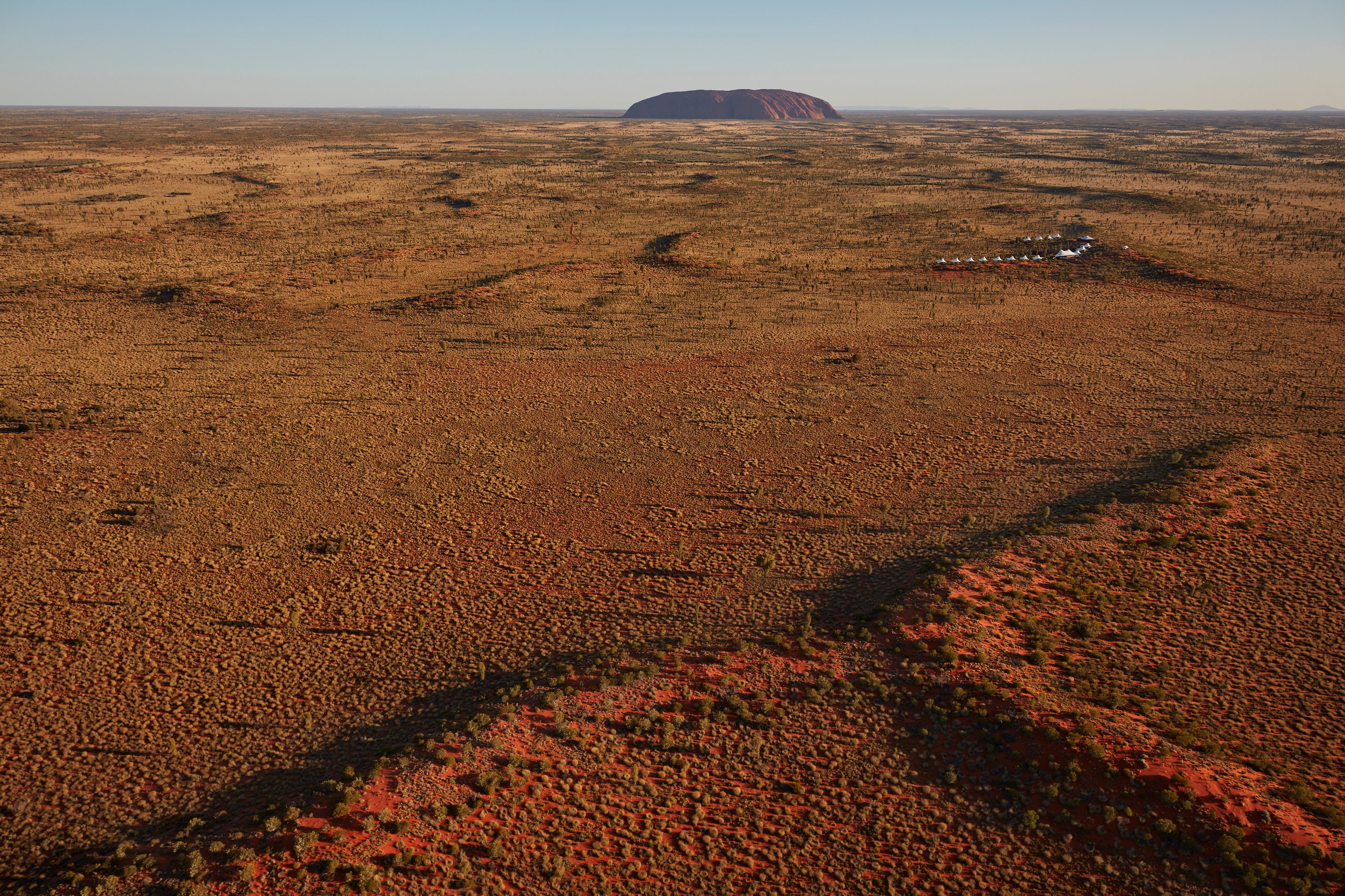
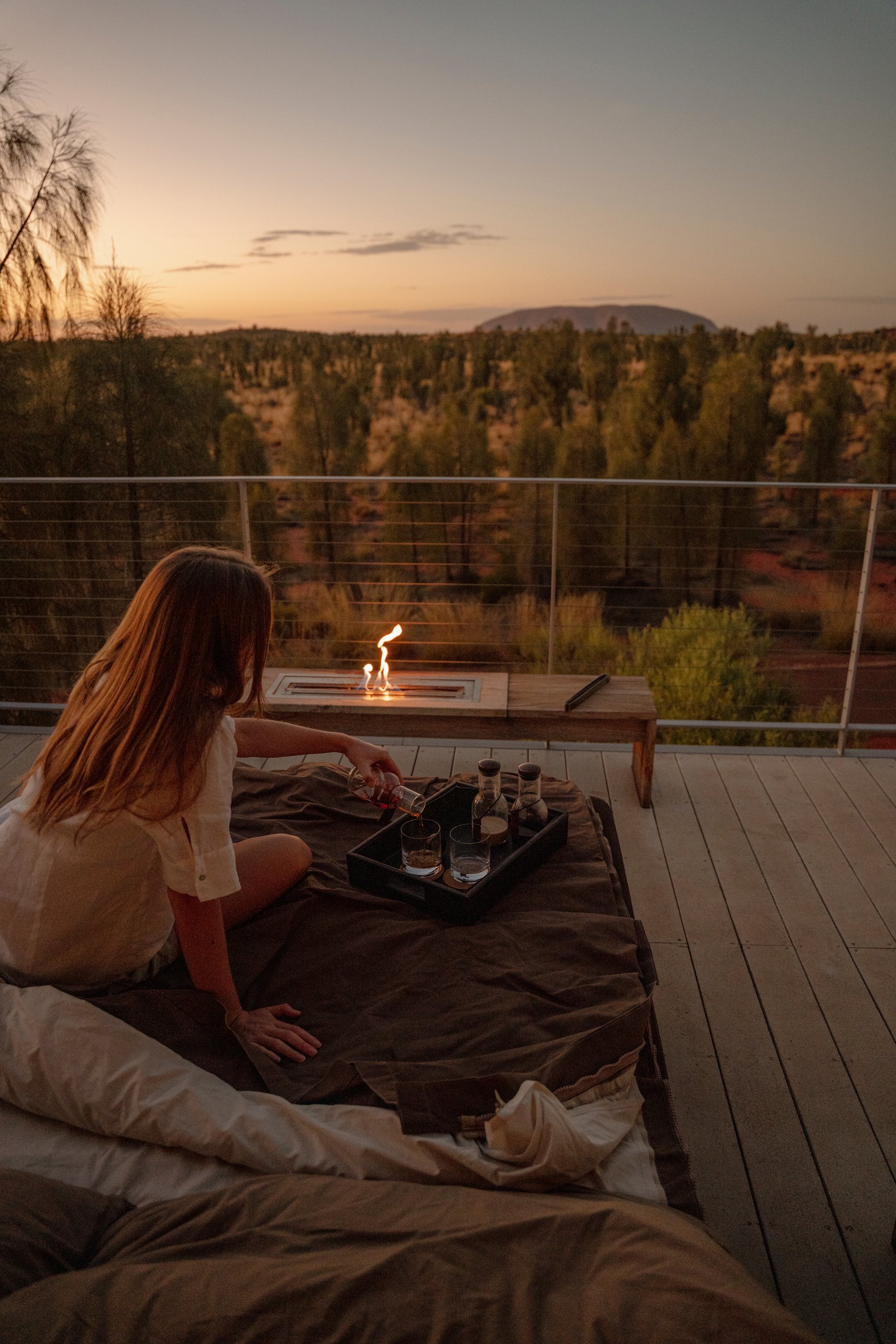
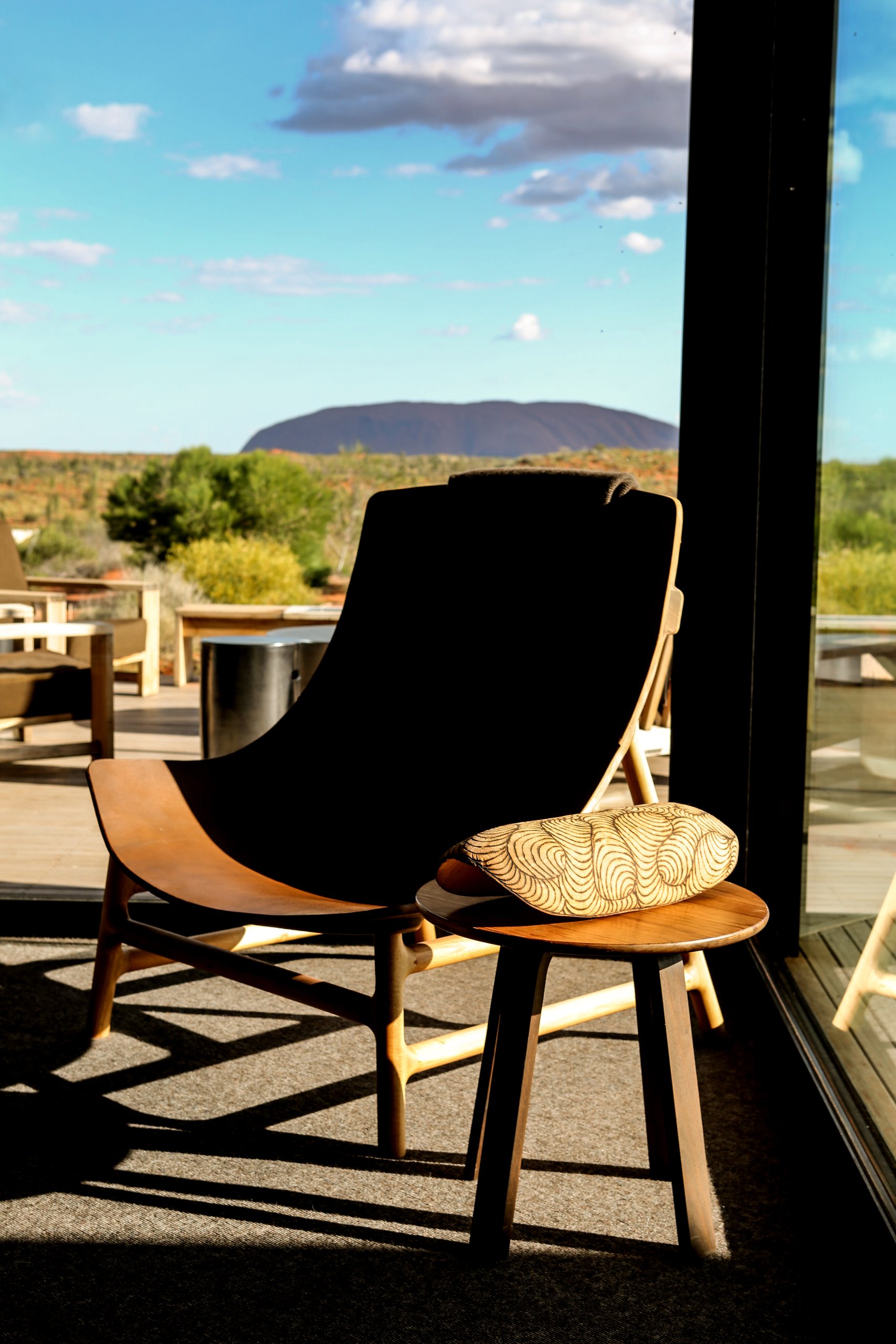
This is Aṉangu Country, a living cultural landscape shaped over millennia through stories, traditions, and an enduring connection to the land. Among the dunes, Longitude 131° looks toward Uluṟu, with the colors and contours of the desert shifting from first light to a sky full of stars.
Uluṟu-Kata Tjuṯa National Park holds dual UNESCO World Heritage status for both its natural and cultural significance.
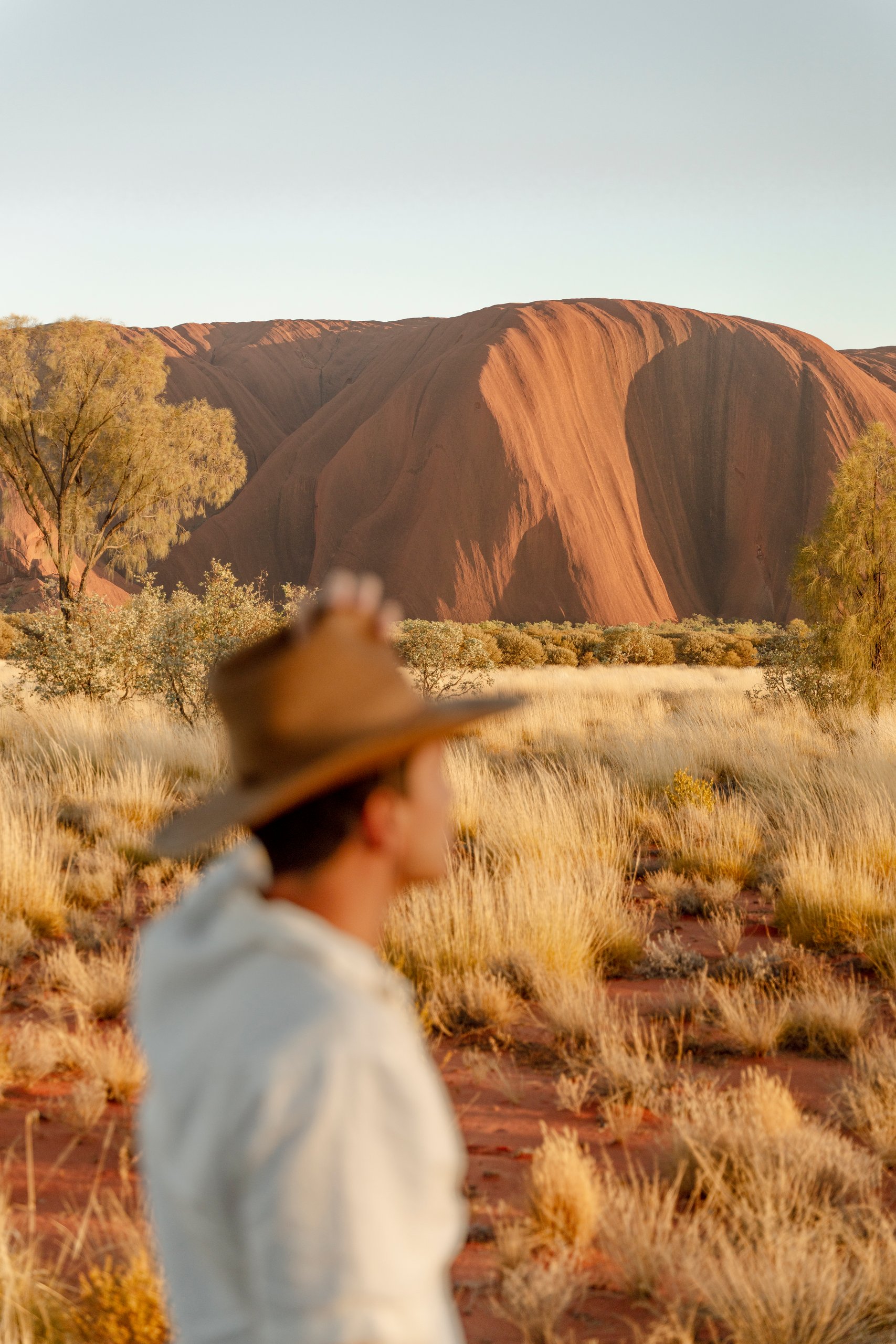
Uluṟu rises 348 meters above the surrounding plain, creating an unmistakable presence on the desert horizon.
Indigenous people have lived in Australia for more than 65,000 years, forming the world’s oldest continuous living culture.
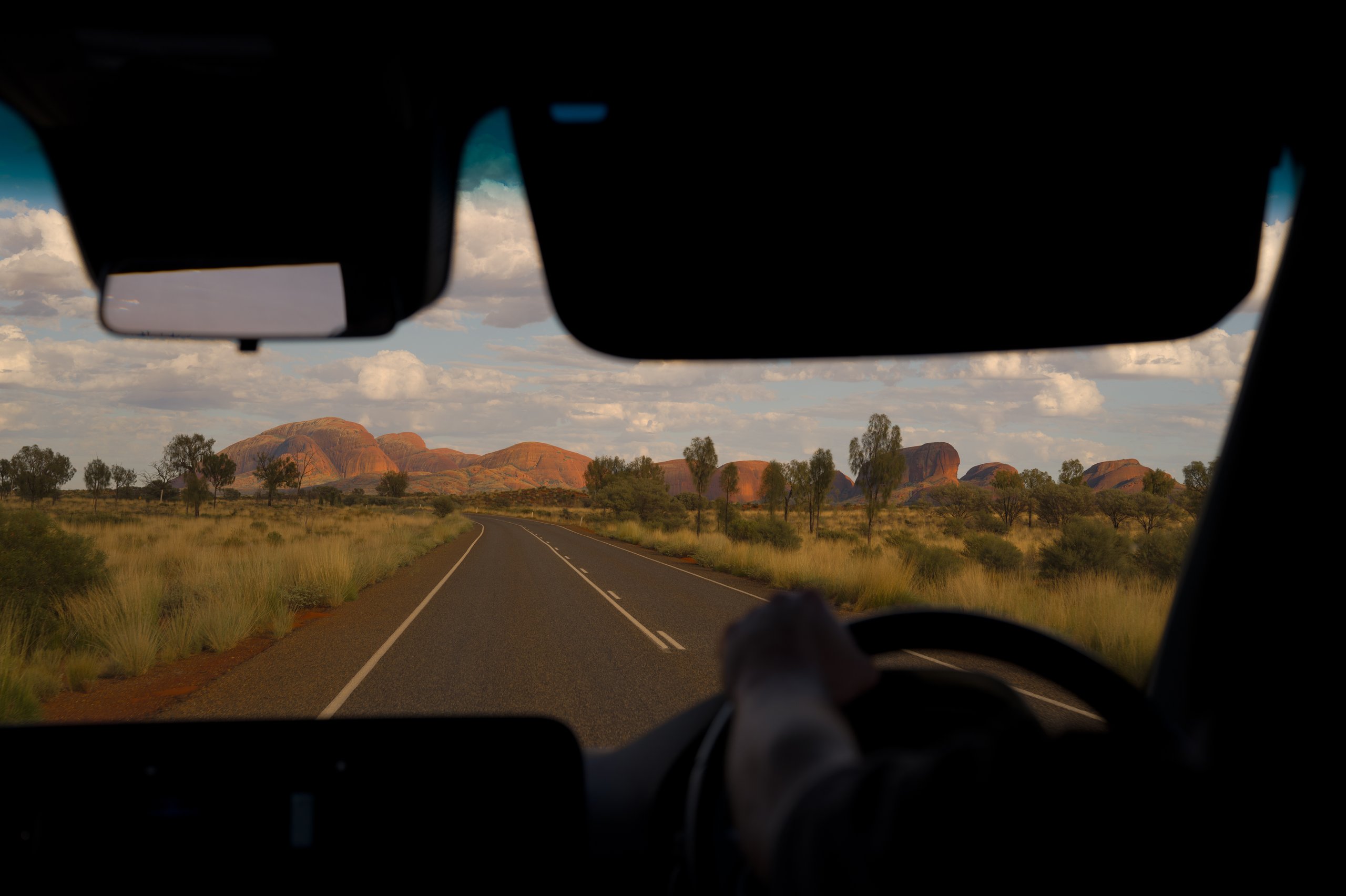
Kata Tjuṯa is a formation of 36 massive rock domes rising from the surrounding desert landscape.
The Red Centre reveals itself slowly, from ancient formations rising out of the desert to the stories and knowledge held in the land.
Uluṟu began forming some 550 million years ago, while nearby Kata Tjuṯa rises as a gathering of 36 immense rock domes.
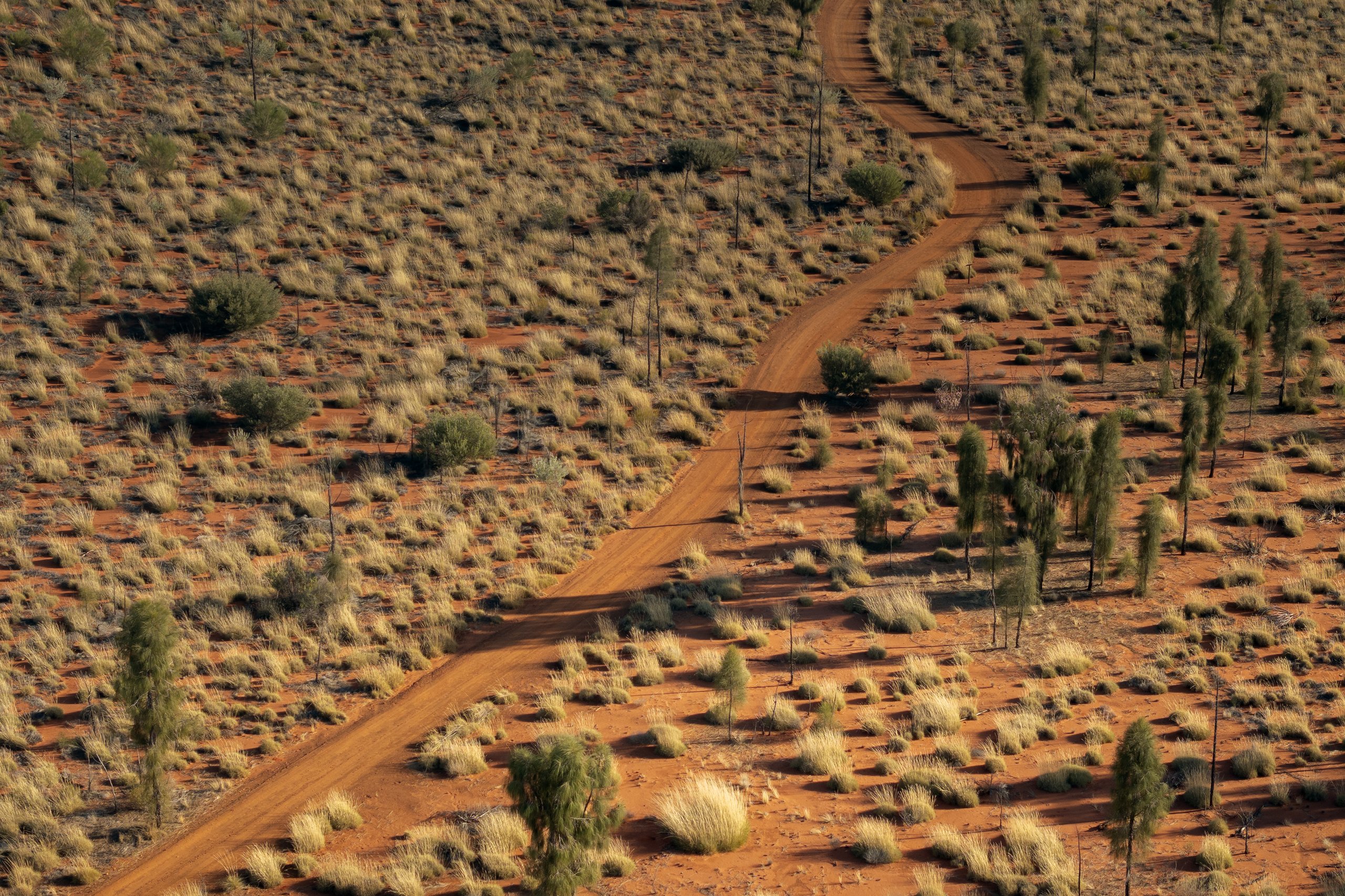
Red dunes and green desert oaks meet blue skies, while seasonal rain can bring wildflowers and fresh growth to the desert floor.
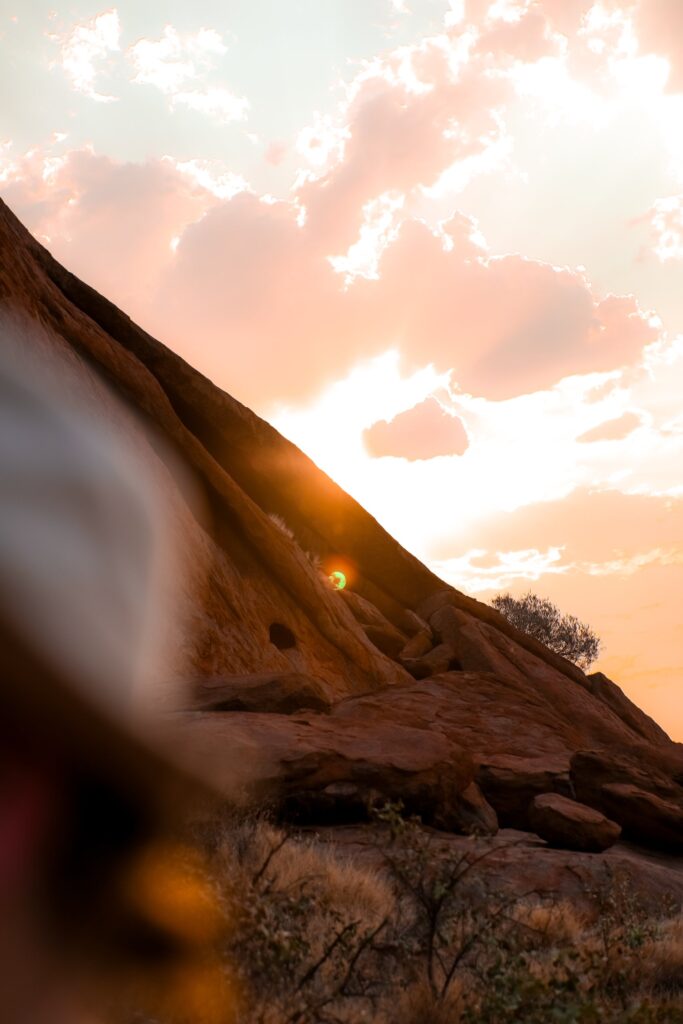
From first light to sunset, the shifting sun continually changes the color and character of Uluṟu and Kata Tjuṯa.
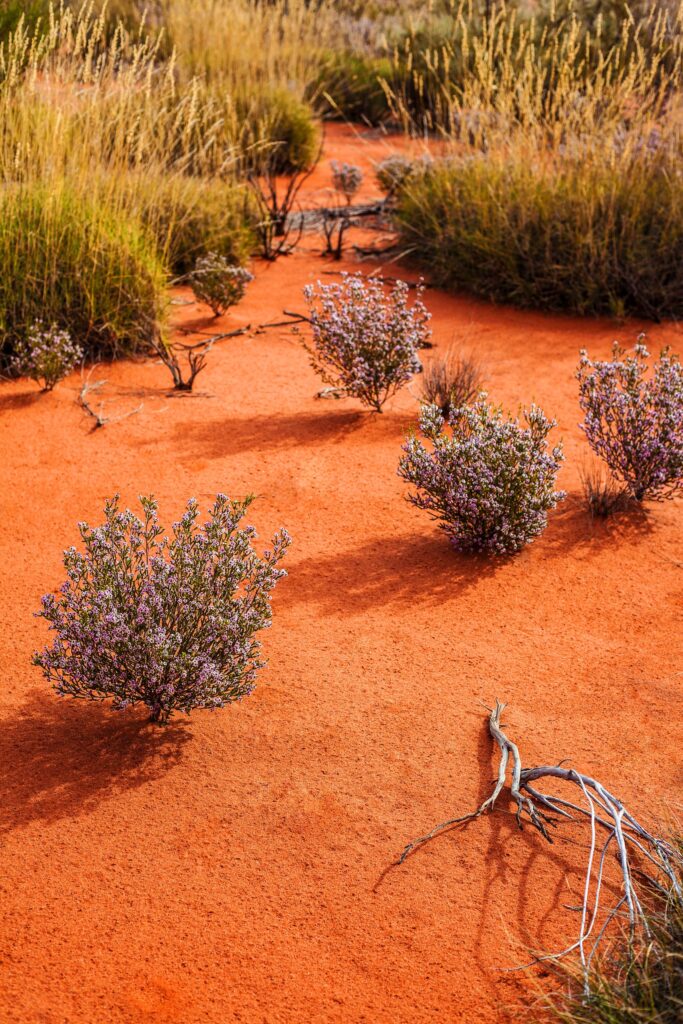
Aṉangu recognize five distinct seasons, reading changes in weather, plants, and animal life across country.
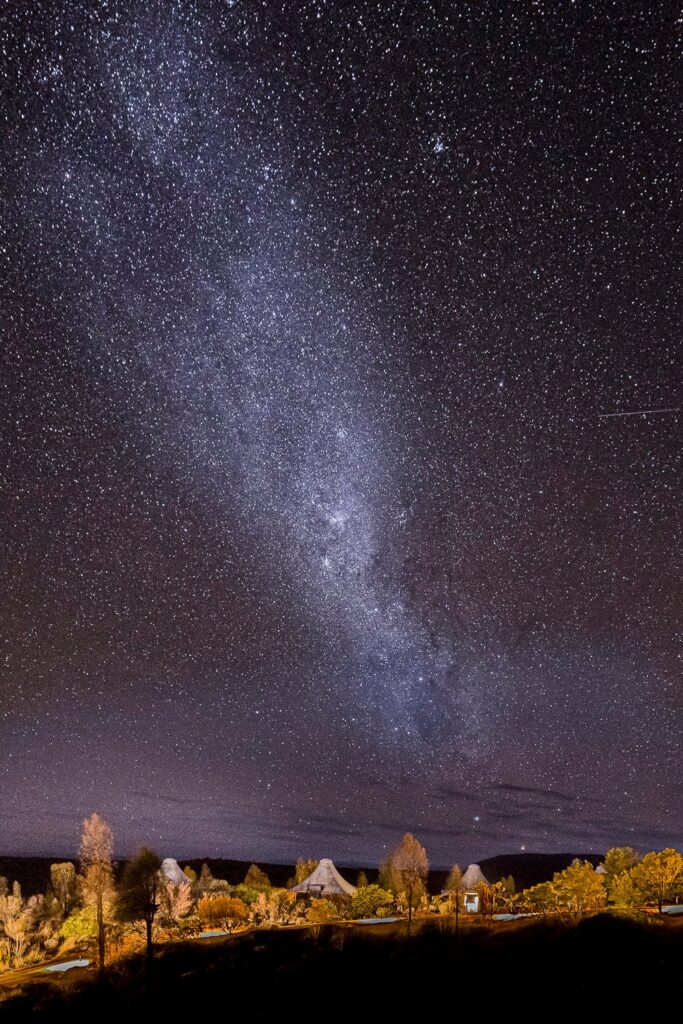
Low humidity and clear winter skies reveal the Milky Way and southern stars with remarkable clarity.
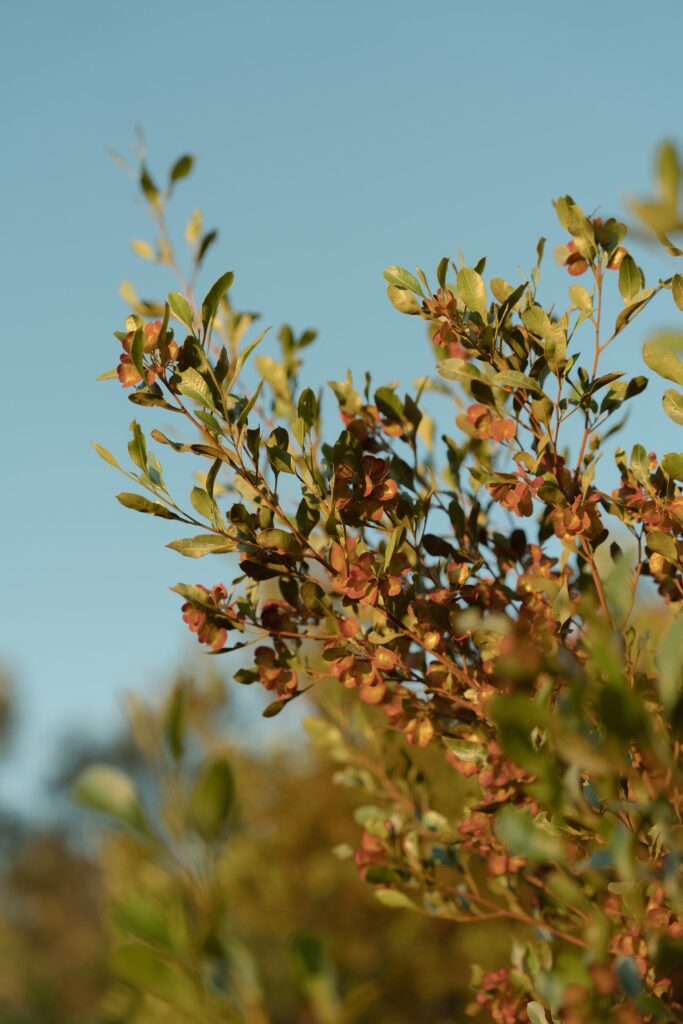
Quandongs, finger limes, muntries, pepper berries, and lemon myrtle are among the native ingredients found across the region.
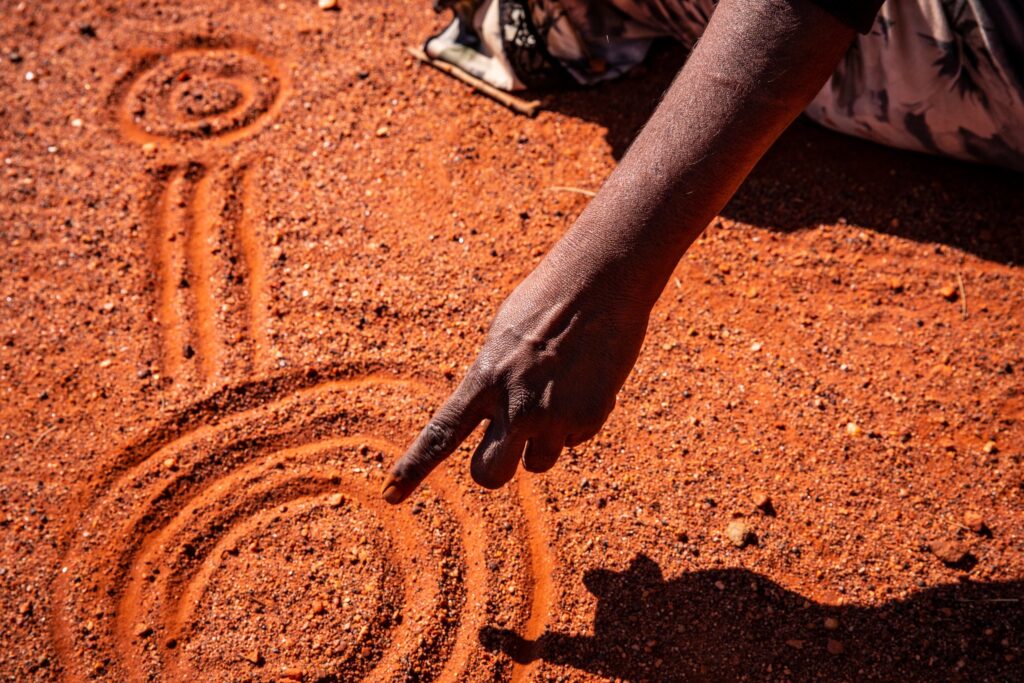
Aṉangu stories, knowledge, and traditions have been passed between generations, connecting people and country for millennia.
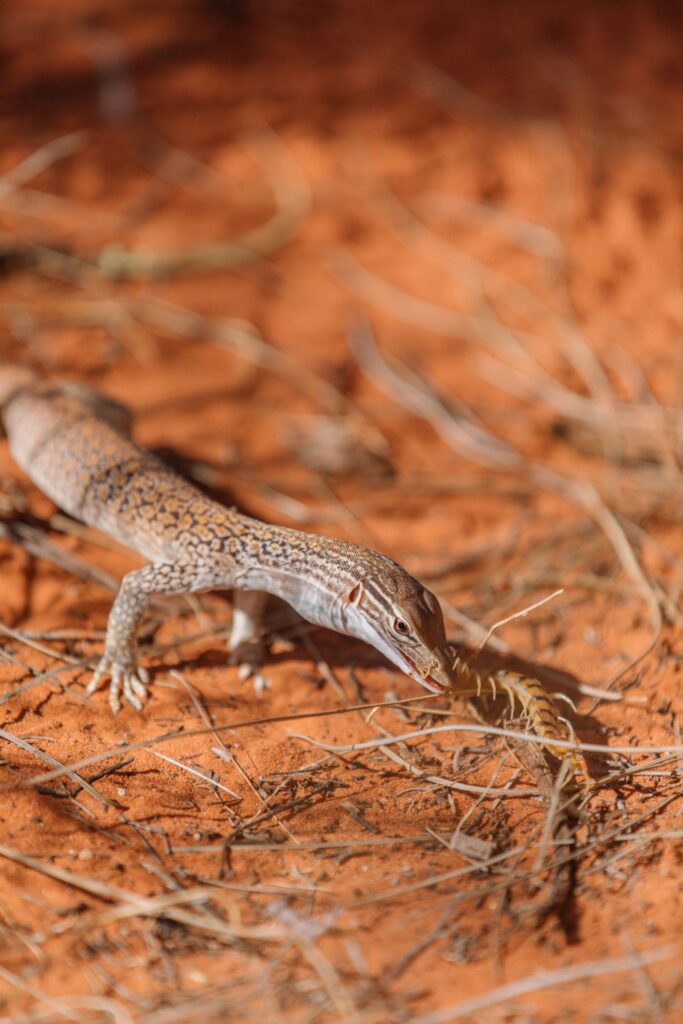
Reptiles, birds, dingoes, and small mammals have adapted to a landscape of extreme heat, scarce water, and shifting seasons.
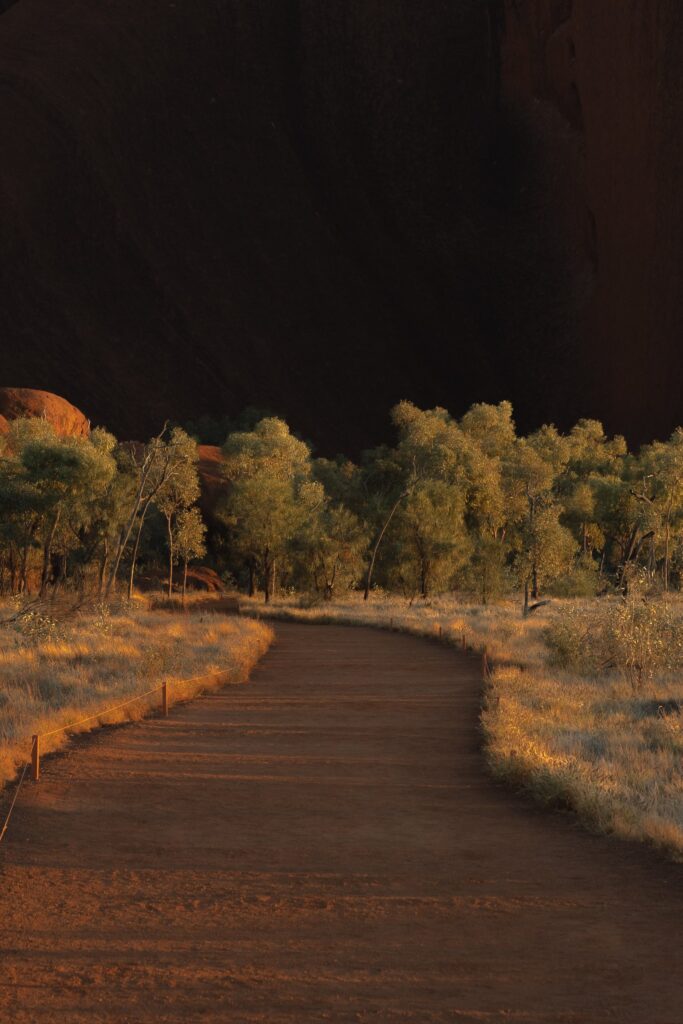
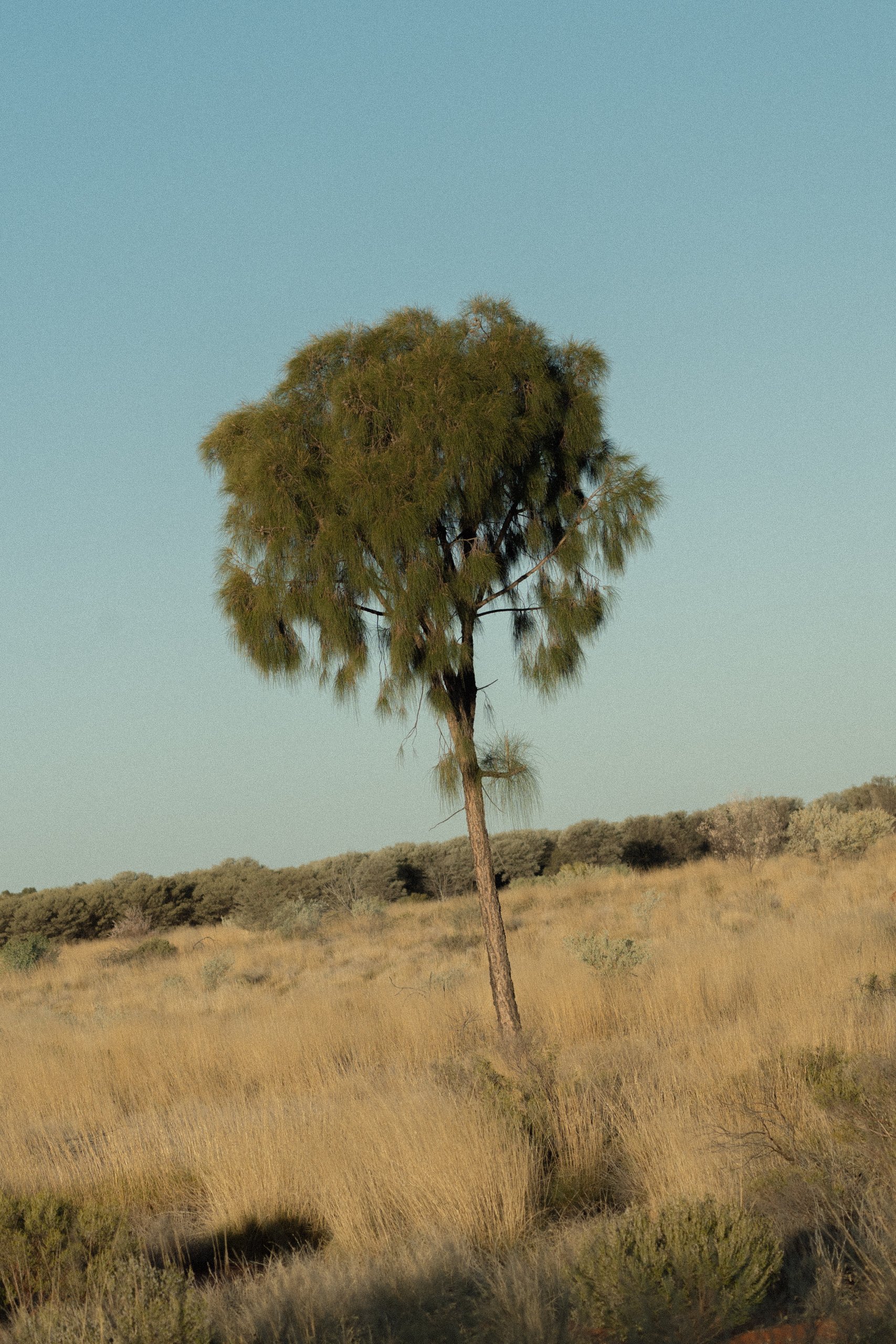
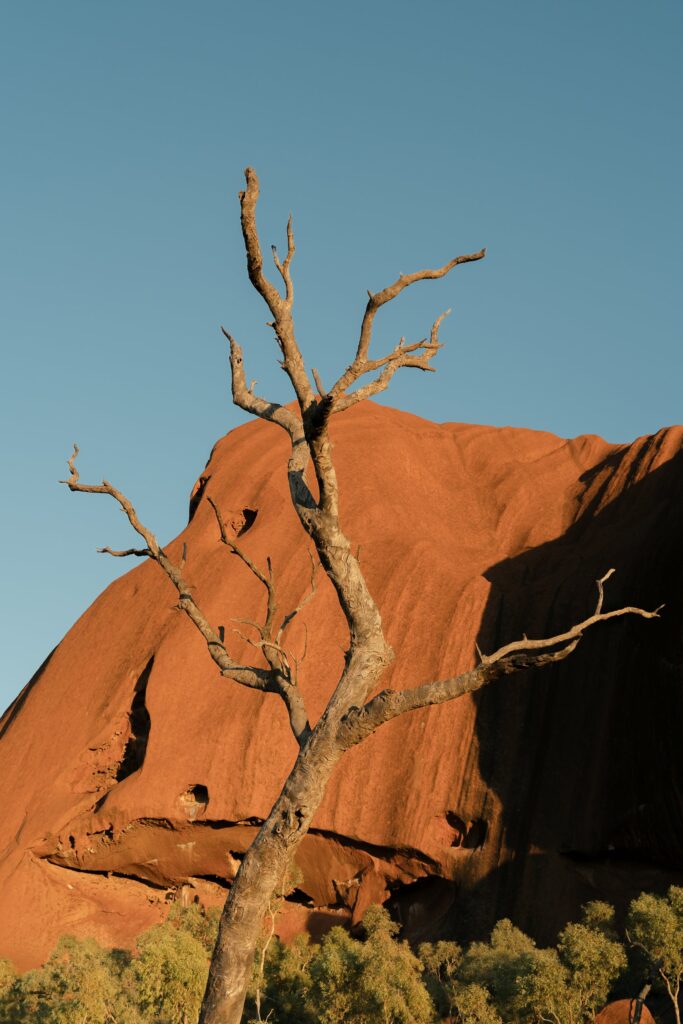
Young desert oaks grow slender and upright before spreading broad canopies across the red earth as they mature.
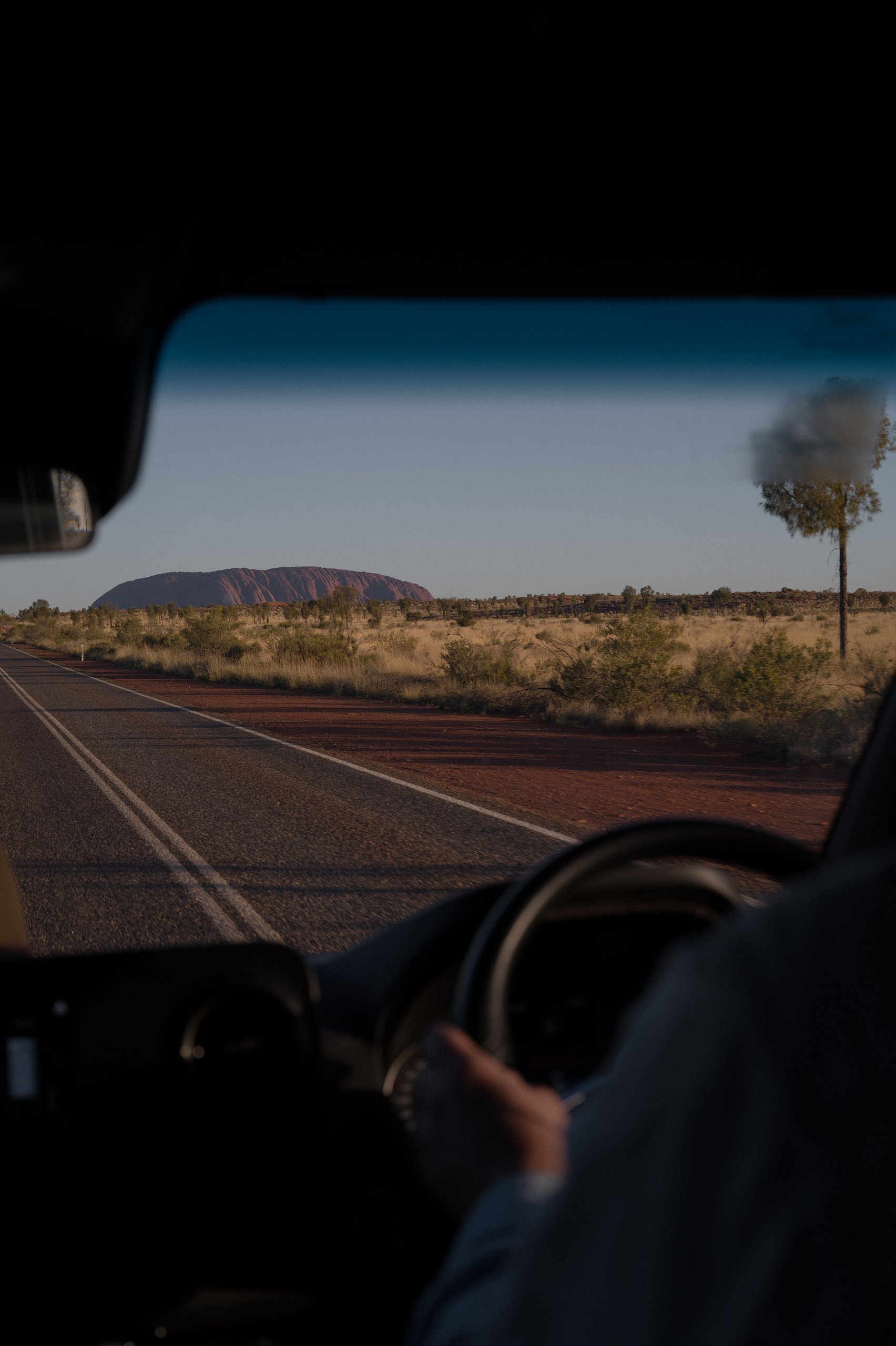
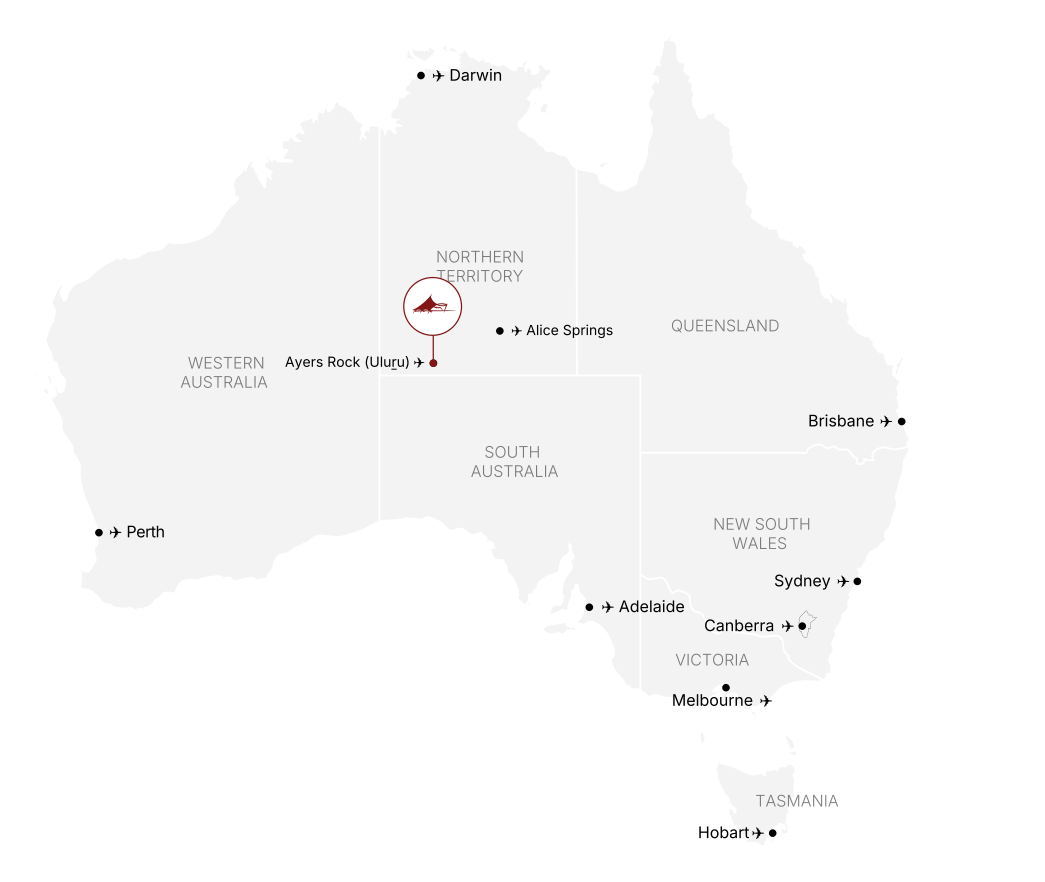
Longitude 131° sits in Australia’s Red Centre, about 15 minutes from Ayers Rock Airport, three hours by road from Kings Canyon, and 4.5 hours from Alice Springs.
Ayers Rock Airport is the main gateway to the region, with direct flights from select Australian cities, including Sydney, Melbourne, Cairns, and Brisbane.
Private charters can be arranged to Kings Canyon, Alice Springs, and other regional destinations with advance reservation.
Complimentary shared transfers connect Longitude 131° with scheduled flights at Ayers Rock Airport. Private transfers can also be arranged for an additional charge.
Guests can reach the region by road from Kings Canyon or Alice Springs. Private vehicles are not permitted at Longitude 131°, so parking is available at nearby Ayers Rock Resort, with complimentary lodge transfers arranged in advance.
SEASONALITY
Summer brings intense heat, dramatic storms, and, after rare heavy rain, waterfalls cascading from Uluṟu. Autumn brings warmer days and cooler nights, while winter is defined by crisp mornings and remarkably clear skies. By spring, temperatures climb again and wildflowers begin to color the desert.
Hot days give way to cooler evenings, with dramatic storms sometimes sending waterfalls cascading down Uluṟu.
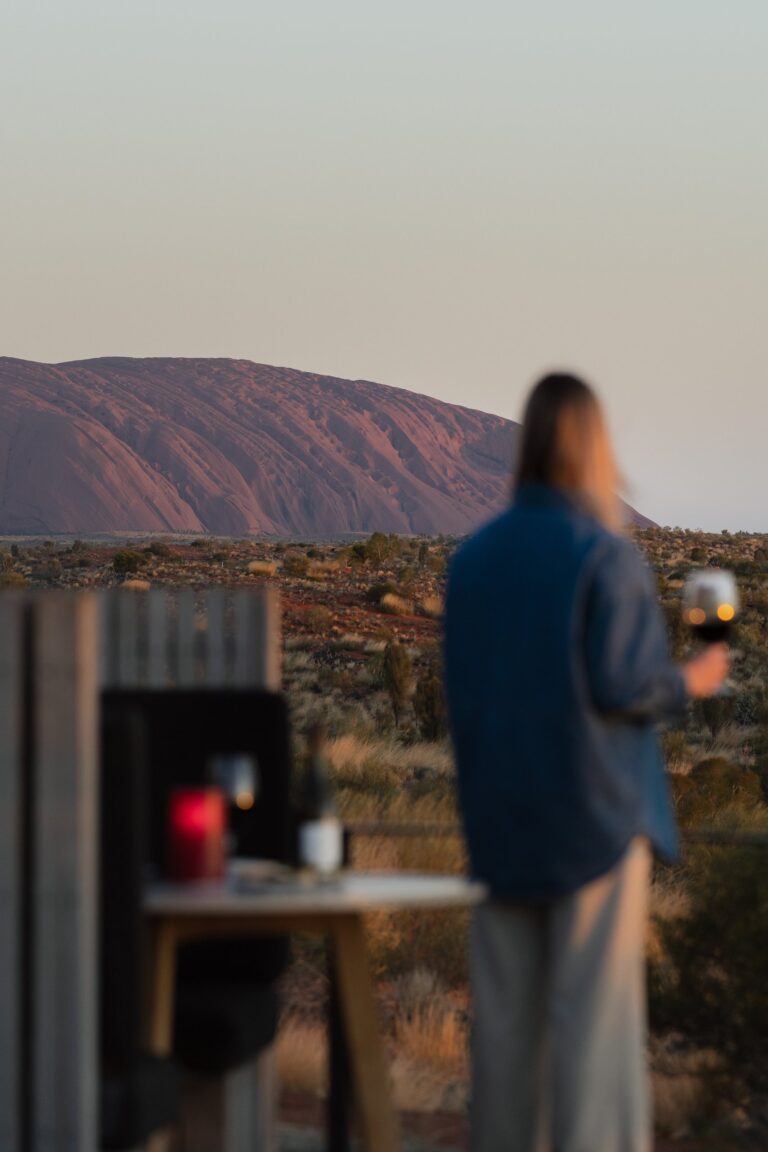
Milder days are made for exploring the desert, especially in the cool of the morning and around sunset.
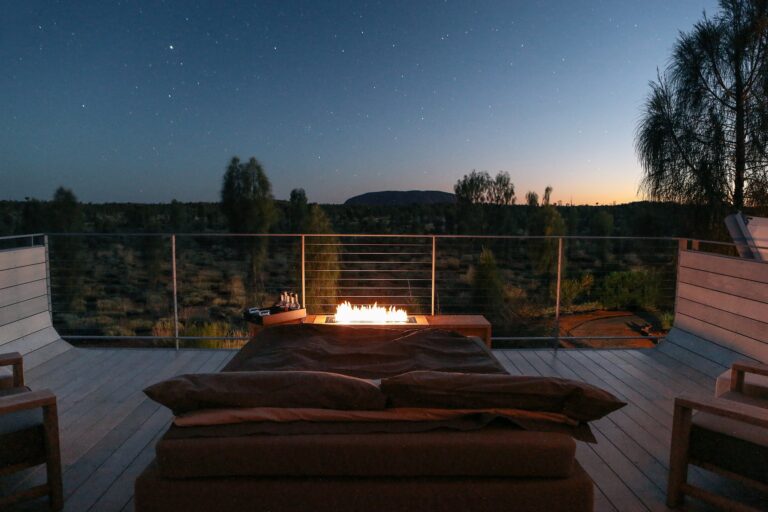
Crisp mornings open into clear, sunny days, while cold nights reveal the Milky Way and southern stars overhead.
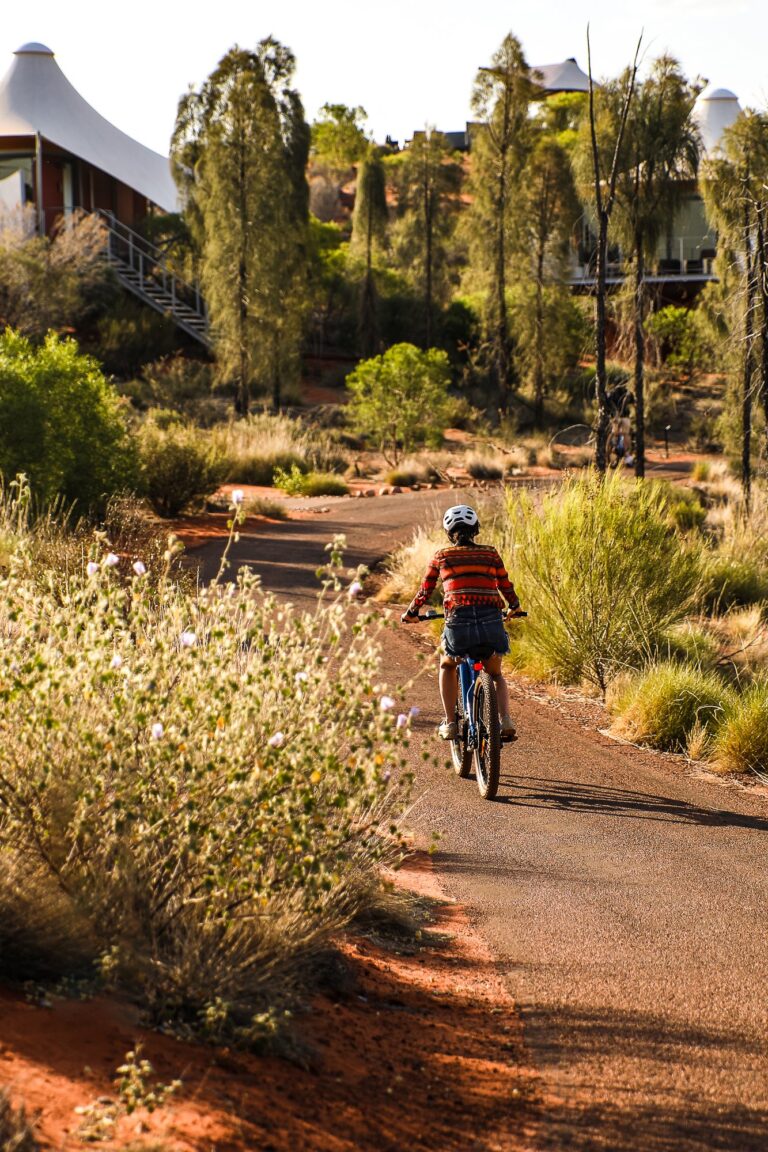
Wildflowers scatter color across the desert as warmer days bring new plant and animal life into view.
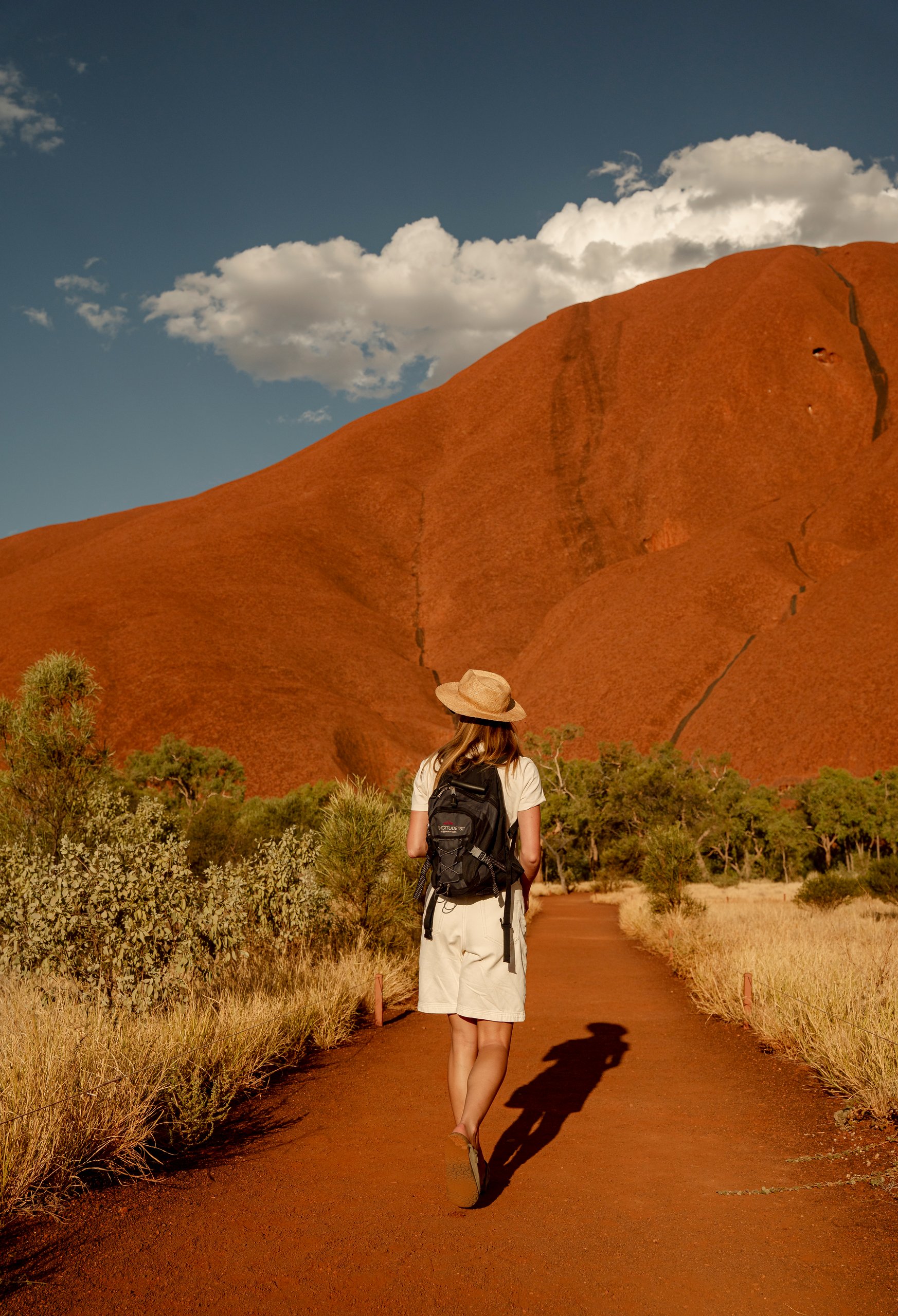
Pack sturdy walking shoes and comfortable clothing for days in the desert, with warm layers for cooler mornings and evenings. A hat and sunscreen are essentials year-round.
Your stay includes all dining and beverages, including French Champagne, a premium in-tent bar replenished daily, signature guided experiences, return Ayers Rock Airport transfers, and use of lodge facilities.
Daily laundry and dry-cleaning services are available for an additional charge.
Wi-Fi is available at the lodge, with television available in the communal lounge.
Signature experiences are timed around the desert’s changing sunrise and sunset. Private touring and bespoke experiences should be arranged in advance and are subject to availability.
Still have questions? Our specialists can help with the details before your stay.
Get in TouchThe local currency is the Australian Dollar (AUD).
Uluṟu-Kata Tjuṯa follows Australian Central Standard Time (ACST), UTC+9:30. The Northern Territory does not observe daylight saving.
English is widely spoken. Aṉangu people are the Traditional owners of Uluṟu-Kata Tjuṯa, and Pitjantjatjara and Yankunytjatjara are among the local Aboriginal languages spoken in the region.
Uluṟu is a single vast sandstone formation, while Kata Tjuṯa is a group of 36 immense rock domes nearby. Together, they define much of the national park’s landscape and cultural significance.
Uluṟu-Kata Tjuṯa sits on Aṉangu Country. Aṉangu are the Traditional Owners, whose knowledge and traditions remain central to understanding and caring for the land today.
Guided experiences offer insight into the cultural significance of Uluṟu-Kata Tjuṯa through stories, places, and perspectives shared on Aṉangu Country.
Uluṟu is part of a living cultural landscape with deep spiritual significance to Aṉangu, whose knowledge and traditions are inseparable from the land itself.
Changing light transforms Uluṟu throughout the day, shifting its surface through deep reds, ochres, and softer tones, especially around sunrise and sunset.
Aṉangu recognise five seasons according to changes in weather, plants, and animal life rather than the Western calendar. Itjanu (Jan–Mar) brings cloud and rain; Wanitjunkupai (Apr–May) marks cooler weather; Wari (late May–Jul) is the cold season; Piriyakutu (Aug–Sep) brings warmer winds and renewed activity; and Kuli (around Dec) is the hottest time of year.